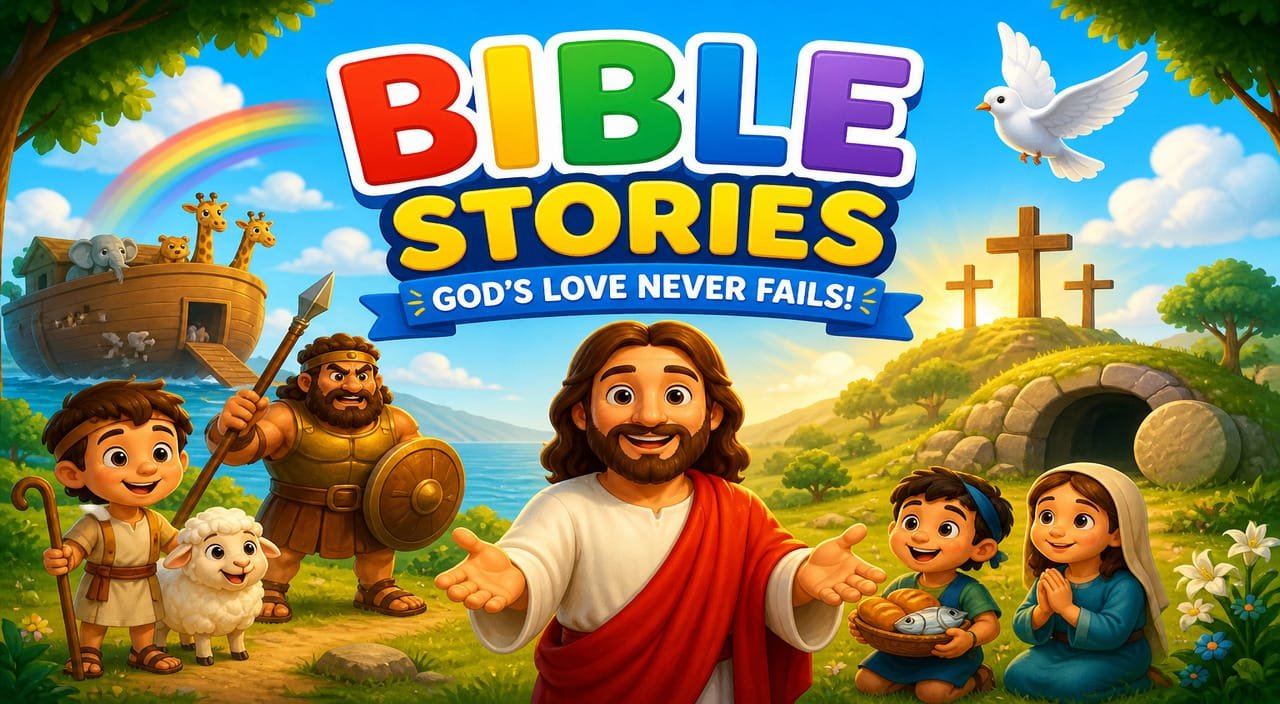
“Kids Bible stories video” refers to short animated or live-action clips that teach Bible stories to children in simple language. They are usually in the 3 to 12 minute range and centered around clean plots, radiant colors, and soft morals.
Moms and teachers enjoy them for circle time, bedtime, or homeschool. Most feature tips, activity guides, and age recommendations to guide grown-ups in finding the perfect match for each kid.
Key Takeaways
- View Bible stories as a family to create routine, generate conversation, and relate stories to daily living. Choose toddler-friendly videos and pair with basic discussion questions.
- Use questions and open-ended prompts to guide kids’ reflection on characters’ decisions, explain tricky concepts, and translate lessons to friends, school, and home.
- Reinforce learning by dramatizing scenes, illustrating, or writing stories. All of these help to internalize the memory and meaning of the Bible.
- Seek out resources that value quality by combining engaging visuals and sound with biblical faithfulness, clear narration, and age-appropriate theology.
- Mix media, moving from screen to storybook and audio dramatizations, and use apps or print-out glossaries to define big words and aid retention.
- Dig into the hard stuff with easy-to-understand, age-appropriate language, foster open discussions, and provide actionable challenges and innovative exercises that help children embody the teachings of the stories.
Engaging Beyond Viewing
Family viewing primes everyone for deeper learning and shared reflection. When kids read Bible stories along with adults, the stories shift from passive amusement to a communal cultural and ethical reference point that prompts inquiry and self-identification.
1. Watch Together
Establish a family Bible story time, perhaps an evening, twice-weekly slot or a brief after-dinner session, to create anticipation and ritual. Pick videos or audio stories that fit the child’s age: simple picture-driven clips for preschoolers, narrated storybook Bibles for early readers, and short animated episodes for older children.
As you watch, ask each family member to identify a favorite moment or character, such as Noah’s faith, Moses’ courage, or Jesus’ kindness, so that children learn to articulate preferences and reason about character. Use group viewing to surface different perspectives. Grandparents can share background or family traditions while parents can frame the story in practical terms.
2. Ask Questions
Ask open-ended prompts that focus on actions, choices, and outcomes. For example, “Why did David trust God here?” or “How do you think Joseph felt when he forgave his brothers?” Promote full-sentence answers and then ask a “why” or “how” to make them think even more.
Use questions to link the story to real life: “Who in your class could use help like Esther helped her people?” Delineate confusing concepts—prophet, covenant, miracle—with quick, specific definitions and examples. These directed conversations allow the kids to exercise their moral reasoning and perceive the applicability of Bible stories.
3. Act It Out
Design easy skits that cut a story into brief scenes. Kids can take turns so all work. Assign roles that suit personalities—shy kids can be animals or narrators, and outgoing ones can be leaders or messengers.
Get hands-on, whether it’s with simple props like scarves, cardboard crowns, or stuffed animals to bring scenes to life. Debrief after the skit: ask how acting out a choice changed their view of a character’s motives or which moment felt hardest to play, so the activity links performance to moral insight.
4. Create Art
Provide a variety of media—watercolor, crayons, collage, or easy digital drawing apps—so kids select what matches their abilities. Have them draw a miracle, promise, or turning point in a story, then let each child describe their picture in a brief caption.
Post the at-home work or online to celebrate effort and inspire additional discussion. Storybook or comic-strip retellings allow children to put events back in order and experiment with their knowledge of the story while reinforcing lessons about mercy and promise.
5. Connect Daily
Incorporate mini videos or audio stories at bedtime or during car rides to keep learning consistent and stress-free. Point out small, daily moments where story lessons apply: honesty at school, sharing with siblings, or courage in new situations.
Motivate short prayers or a one-liner connected to the day’s story to develop a habit.
Selecting Quality Content
Choosing quality content. Miss choosing videos that balance great storytelling with biblical truth and good theology. Pick content that corresponds with your child’s age, interests, and level of understanding so lessons resonate without getting lost in the weeds or preachy virtue signaling.
Quality content is content that matters: it’s relevant, it’s accurate, and it’s deep enough to provoke inquiry and rewatching. Utilize video, audio, and interactive media to enhance your retention and transform your classroom or home into an audio-visual learning environment.
Visual Appeal
Choose videos with crisp, well-composed animations and vivid color schemes that catch the eye without drowning out the narrative. Period details in costumes, architecture, and geography assist children in situating stories instead of assuming a contemporary, western setting.
Innovative visuals, like symbolic visualizations for conceptual principles, slow motion for miracles or close-ups on expressions, enable kids to visualize parables and profound messages. Compare recommended series: award-winning animations often offer richer palettes and textured art, while lower-budget options may still work if they keep proportions and cultural markers accurate.
Sound Design
Choose quality content, dramatized audio with crisp narration, music, and subtle sound effects that back scenes instead of drowning out speech. Expert audio keeps adolescent ears engaged and increases understanding.
Cheap audio makes even the most well-researched content seem hokey and diverts attention from the message. Evaluate samples for consistent levels, clear diction, and music that sets the tone without overwhelming dialogue. For busy families, audio-only dramatizations or story podcasts offer more flexible, on-the-go options that still leverage sound design to educate.
Storytelling Style
Prefer stories with narrative shape and redemptive arcs over easy moral labels. About: Choosing quality content – Good storytellers start with a little hook, work through conflict, and leave space for contemplation without being heavy-handed with morals.
Seek out openings that welcome empathy and breaks or cues that allow adults to provide context. Compare resources: storybook Bibles often simplify language well, video workshops add visual demonstration, and podcasts can deepen tone through voice alone. Switch format to enhance learning, then adjust content after review.
Biblical Faithfulness
Check that they are aligned with scripture and avoid the fluff that alters key events or figurative meanings. Good resources reference verses or have chapter markers for further reading.
Appreciate good treatments of central stories—creation, exodus, resurrection—and make sure lessons reinforce core theology without twisting. When craft and faithfulness intersect, content is both compelling and credible and is better able to fulfill its goal.
What Stories Resonate
A simple map of what stories resonate aids parents and teachers in selecting videos that educate, motivate, and match developmental needs. Here are some fundamental stories, why they work, where they belong, and how to present them to kids from preschool to early teens.
Creation
The creation story offers a clear starting point: God as maker, order from chaos, and the special place of people. Illustrated videos and storybook Bibles that display the garden, animals, and first family assist young viewers in understanding scale and wonder.
Use lurid colors for days of creation, then sedate scenes for Eden to maintain emphasis. Highlight obedience and consequence with a minimal judgmental tone to demonstrate how decisions impact relationships.
Connect the story to stewardship by proposing easy things—planting, recycling, and caring for pets—that kids can undertake at home or school. For preschoolers, short clips are best, but older kids can manage exploring why the rules are there in the first place and how mercy shows up after a mishap.
Old Testament Heroes
Moses, David, Ruth, and Esther provide a combination of adventure, faith, and ethical ambiguity. Videos that time the journey—a flight from peril, self-uncertainty, and ultimate confidence—resonate through the decades.
Use episodes that highlight a single virtue: Moses for leadership, David for courage, Ruth for loyalty, and Esther for bravery. Make room for flaws: show David’s error, Moses’ doubts, and how those lead to grace and growth.
For families and small groups, opt for the editions with reflection questions so kids can identify traits they admire and commit to one specific action to attempt, like speaking up for a pal or lending a hand around the house. Middle graders, though, respond well to more expanded retellings, with some background information and foreshadowing of themes.
New Testament Miracles
Jesus’ stories of healing, feeding, and raising address primal needs – security, sustenance, and aspiration. Use videos with clear human faces and sound that highlights compassion.
Brief reenactments of feeding the 5,000 or calming the storm serve nicely to demonstrate both compassion and power. Describe miracles as symbolic of Jesus’ identity and God’s promises, not just magic.
Pair stories with simple faith practices: a brief prayer, a thank-you activity, or a list of ways to help others. These stories spark conversations around faith in hard times and how prayer and action can coexist.
The Commandments
Teaching the 10 commandments as nothing more than common-sense, everyday rules to keep communities healthy. Dramatized videos and picture books that put each commandment into a kid’s world make them concrete: share toys, tell the truth, and respect parents.
Role-play demonstrates the consequences of decisions and rehearses improved reactions. Make it memorable with songs or short chants and propose daily prompts—a commandment a week—so kids can experiment with living them out in small ways.
From Screen to Storybook
From screen to storybook provides that logical, next-level engagement with Bible stories. Kids sometimes have to get used to a different, slower pace and less visual cueing, but that transition can fortify imagination, focus, and analytical skills.
The Bible itself tells one massive story of God’s collaboration with humanity toward a restored Heaven and Earth. Printed storybooks and illustrated Bibles make chapters of that journey easier to return to, contemplate, and debate.
Audio Adventures
Dramatized audio stories and podcasts are a bridge between screen and page. Great productions employ music, interesting sound effects, and unique voices to evoke scenes with no visuals, allowing kids to imagine the happenings.
Pop it on for car rides, naptime, or family meals to ditch the screen while maintaining the storytelling rhythm. Some series serve preschool ears with brief, unambiguous episodes, while others provide multi-episode arcs for older children, encouraging serial listening and recall.
Our favorites are dramatizations that utilize an entire cast of voices, music cues, and atmospheric sound to make Genesis, the Psalms, or the parables come alive for all ages.
Illustrated Books
Opt for storybook Bibles with illustrations that aid understanding and honor cultural context. A good illustrated book combines simple, succinct copy with detail that encourages discussion.
A painting can depict setting, dress, or land in a way that tacitly suggests history and helps us comprehend those ancient peoples and practices. For older kids, seek out versions that employ metaphor and poetry to unpack heavier topics such as covenant, justice, and mercy.
Physical copies offer tactile benefits: turning pages, marking passages, and re-reading favorite spreads promotes calm and focused quiet time. Winning or bestselling storybook Bibles are terrific gifts and commonly come with family notes or questions for discussion.
Interactive Apps
Interactive apps mix video, audio, and activities for a multisensory experience. They are tested for learning objectives, easy navigation, and age-appropriate content.
Handy bells and whistles include quick quizzes, memory verse starters, and creative activities like illustrating or rearranging scenes that further aid understanding and retention. Apps can follow and recommend next steps.
Hard copies should stay front and center for bedtime and continued reading. Top-rated faith-first storytime and play-based learning apps have offline modes for travel and low-bandwidth environments.
Tackling Tough Topics
Children’s Bible story videos can sometimes deal with themes that seem big and heavy. Here she provides specific examples of how to frame concepts such as justice, God’s nature, and theological terms in a way kids can comprehend without feeling overwhelmed. Practical examples, video ideas, and adult guidance follow.
Understanding Justice
Biblical justice can be illustrated through stories like Joseph in Egypt, who was betrayed but rose up to save many, Daniel, who stood for truth when threatened, and the Good Samaritan, who demonstrated concern across societal boundaries. Instead, utilize short action-oriented clips—Joseph feeding during famine, Daniel in the lions’ den, the Samaritan tending wounds—so children experience justice as both protection and care.
Human justice wants rough punishment or an equilibrium. God’s justice brings with it mercy and long-term healing. Show two scenes side by side: a courtroom-style moment and a mercy-filled reunion. Ask simple questions after the clip: Who helped? Who forgave? What made the damage right?
’emotionallyAudio narration that focuses on emotions and decisions aids understanding. For example, act out an unfairness and stop to ‘emotion label,’ then demonstrate how a just action can be both kind and firm. Give children small, practical tasks: share a toy, help a friend, or speak up for someone treated unfairly.
Defining God’s Character
Present God’s attributes with clear story anchors: the Prodigal Son for mercy and welcome, creation scenes for God’s power and care, and Jesus’ healings for compassion and faithfulness. Superimpose some peaceful narration and close-ups of people being assisted to illustrate love in action.
Combine one second of creation with 10 seconds of Jesus healing. Let children notice patterns: God cares, God keeps promises, God acts. Contrast God’s holiness with human limits by reading a simple line from scripture followed by a question: What can we not do alone?
This creates room to discuss need and grace. Promote reflection by having kids each draw one way they want to ‘act like God’—love, keep a promise, help someone—and then discuss ideas aloud.
Explaining Big Words
Demystify terminology. Resurrection means ‘coming back to a new life.’ Covenant is ‘a promise that lasts.’ Prophecy refers to ‘messages about God’s plan.’ Use visuals: a seed sprouting for resurrection, two hands shaking for covenant, and a roadmap for prophecy.
Embed definitions right into videos and storybooks. Say it again, provide the quick definition, then display an example scene. Make a mini glossary card deck for kids to keep during story time and a one-page handout for adults to spark discussion.
Little quizzes or matching games give terms a no-pressure reinforcement.
The Creator’s Challenge
This section frames the central task for creators of kids’ Bible stories videos: making scripture feel lived-in, practical, and creatively engaging while keeping content accessible for a global, diverse audience.
Motivate kids to view themselves as participants in God’s unfolding narrative and mission in the world. Select narrative options that connect ancient history to modern careers. Depict a child in a story assisting a neighbor, then zoom out to an animated map or pop-up caption that links that act to relevant themes such as service or courage within the Bible.
Offer examples: a short scene where a child shares food modeled after the feeding of the crowd, or a montage where kids help rebuild a playground inspired by themes of restoration. Incorporate various faces, backgrounds, and common objects so that international viewers can see themselves within the scenarios. Don’t write kids as bystanders; write them into the scene where tiny decisions resonate with the grand biblical narrative.
Dare them to take what they learn from Bible stories into their daily lives and relationships. Design short discussion questions and easy home activities featured at the close of every show! Example prompts: “Name one time you felt afraid like David. What had you done?
Offer role-play scripts for parents and kids to try: short, two-line exchanges that model conflict resolution or apology based on Joseph’s family story. Supply clear, low-cost activity ideas: a 10-minute family walk to list things you are thankful for after a story about gratitude or a 15-minute meal where each person names a kindness they will do that week.
Make directions concrete, provide metric measurements for any supplies, and provide substitutions for city or countryside locations. Inspire creative reactions — artwork, writing, kind acts — from scripture. Demonstrate rapid, incremental art projects on screen, like creating a quick parable collage from magazine scraps or a one-paragraphed modern-day retelling of a miracle.
Give examples of community projects kids can join: a neighborhood clean-up inspired by stewardship themes or a letter-writing drive for elders modeled on hospitality stories. Provide templates downloadable from the video’s page: story starters, drawing outlines, and printable kindness cards that can be adapted worldwide.
Encourage children to remember that their decisions and behavior can mirror God’s love and truth daily. Create recurring micro-moments in episodes where a minor decision has a visible consequence, such as assisting a peer, telling the truth, or giving toys.
Tell the cause and effect simply so kids observe how decisions count. Round out with a brief, actionable challenge related to the episode, such as “Perform one act of kindness today,” and an easy way for families to keep score together.
Conclusion
They learn quickly from smart, brief videos that connect to real life. Choose videos with simple words, a gentle rhythm, and positive role models. Combine screen time with read alouds, easy crafts, or a quick discussion about how the child felt. Choose story selections appropriate to the child’s age and queries. For hard issues, select peaceful, truthful segments and accompany them with one or two tangible illustrations or a soothing exercise. If you produce, then shoot for obvious plots, brief scenes, and authentic voices kids believe. Try a sample: Watch a five-minute Noah clip, read a two-page picture book version, then draw an animal pair together. Ready to give one a whirl? Begin with a single brief video and a basic follow-up.
Frequently Asked Questions
What age range is best for kids’ Bible stories video content?
Videos are great for 2- to 10-year-olds. Easy, catchy tales fit toddlers. Longer, discussion-ready videos suit 6- to 10-year-olds. Match length and complexity to attention span and maturity.
How do I pick high-quality Bible story videos?
Select videos featuring distinct scripture citations, language appropriate for the intended age, sound theology, and well-known producers (churches and educational publishers). Browse reviews and preview full episodes prior to using.
Can videos replace reading the Bible or storybooks?
Videos are add-ons. They develop interest and visual comprehension. Follow up with reading or discussion to really get in there and form faith.
How should I address difficult topics shown in Bible stories?
Preview content! Just use straightforward, honest explanations. Soothe the little ones, encourage inquiry, and steer the discussion toward optimism, security, and spirituality.
Are animated Bible stories accurate to the original texts?
Many are dumbed down. Try to find ones that mention Bible verses and ask a trusted adult or your pastor what they mean. Cross-reference multiple sources for important facts.
How can I extend learning after watching a video?
Follow up with drawing, role-play, or craft activities or a brief family discussion. They enhance retention and promote moral application.
What platform safety checks should parents perform?
Turn on parental controls, read comments and descriptions, and check creators. No autoplay, curated channels, or subscription services used sparingly.