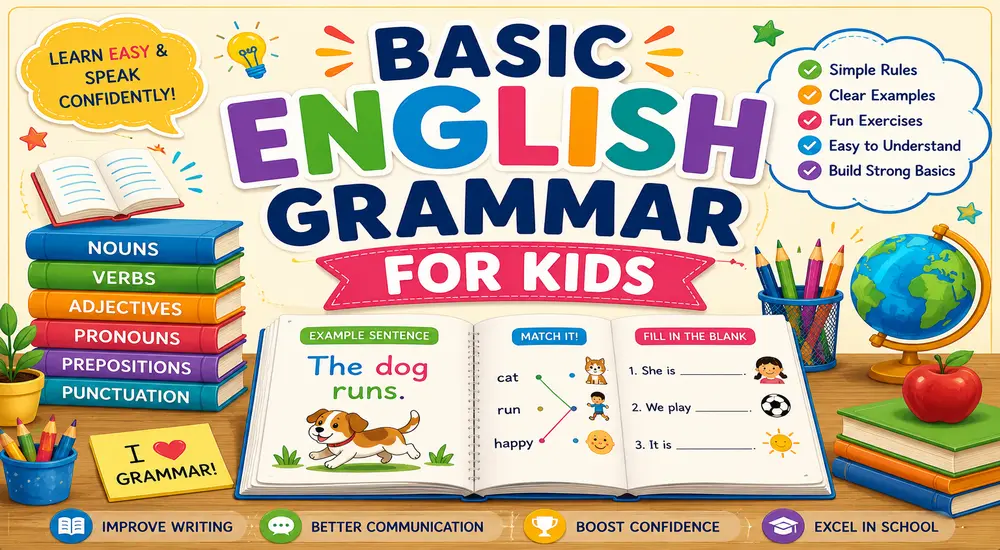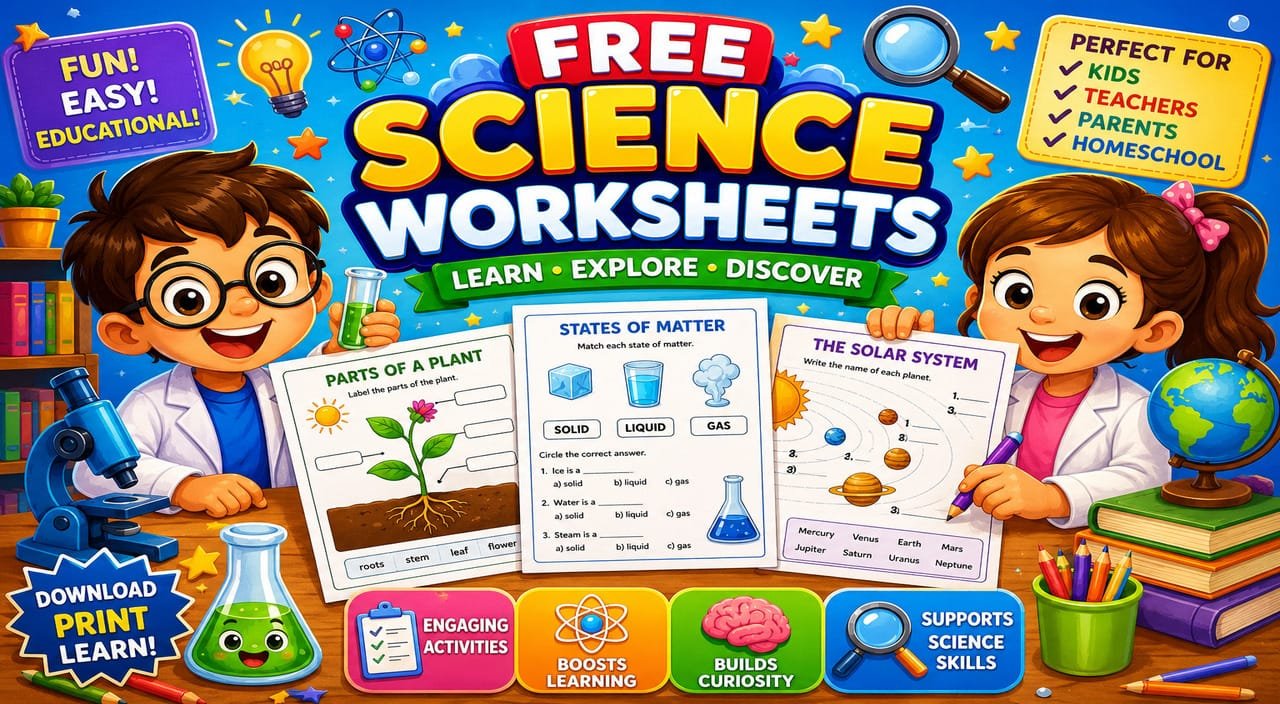
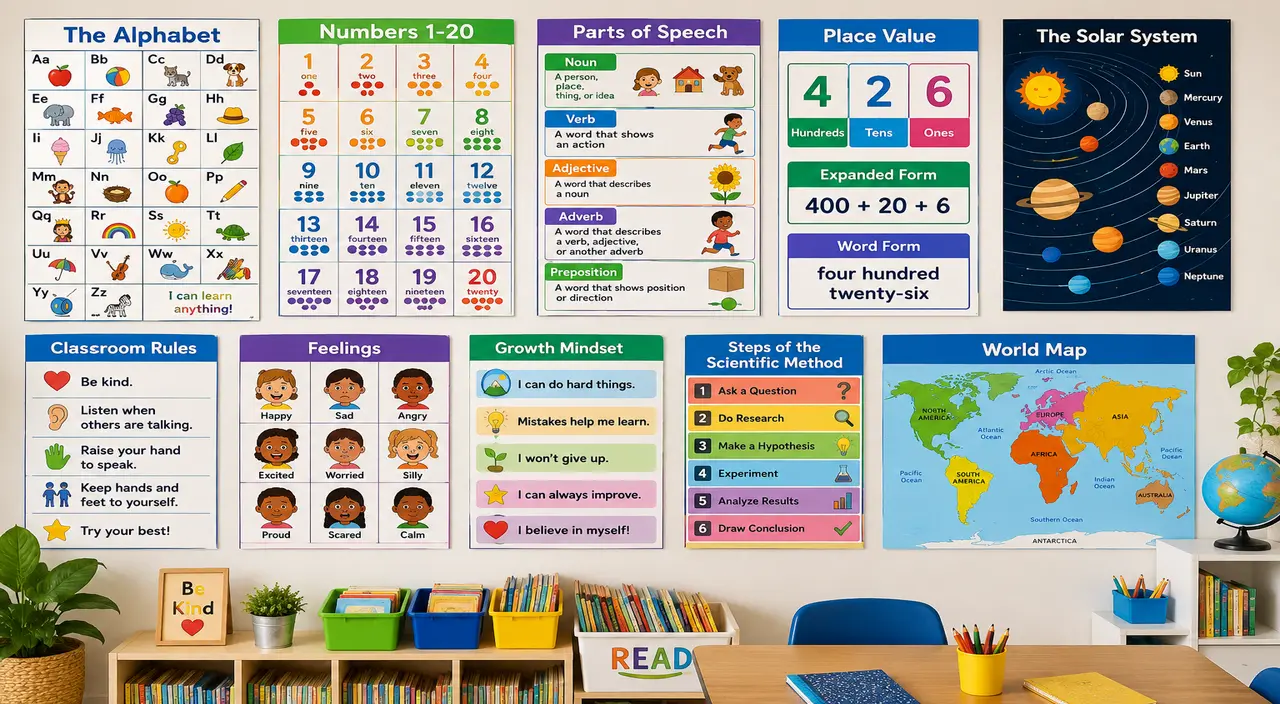
The best children’s educational posters for classrooms do more than make walls look cheerful. They help students remember key ideas, support visual learners, reinforce routines, and create a more welcoming learning space.
For teachers, homeschool parents, and childcare providers, the challenge is choosing posters that are actually useful—not just colorful. A good classroom poster should be easy to read from a distance, matched to the children’s age, and connected to what students are learning.
This guide breaks down the best types of educational posters for classrooms, what to look for before buying, and how to use them without cluttering the room.
What Makes a Good Educational Classroom Poster?
A strong educational poster should be:
| Feature | Why It Matters |
|---|---|
| Clear and readable | Children should understand it quickly |
| Age-appropriate | Preschool posters should look different from upper-elementary posters |
| Curriculum-aligned | The poster should support real lessons |
| Visually simple | Too much text can overwhelm students |
| Durable | Laminated or thick cardstock posters last longer |
| Inclusive | Images and examples should feel welcoming to different learners |
Classroom posters work best when they support learning, routines, or emotional safety rather than simply filling wall space. Educational suppliers commonly offer posters for literacy, math, science, history, maps, motivational themes, and teaching charts.
Best Children’s Educational Posters for Classrooms by Category
1. Alphabet Posters
Alphabet posters are one of the best choices for preschool, kindergarten, and early elementary classrooms. They support letter recognition, phonics, handwriting, and early reading skills.
Look for posters that include:
- Uppercase and lowercase letters
- Clear letter formation
- Simple images for each sound
- Phonics-friendly examples
- Large, easy-to-read fonts
Alphabet posters are especially useful near reading corners, writing stations, and morning meeting areas. Resources such as Twinkl describe alphabet posters as helpful for letter recognition, phonics, and handwriting support.
2. Number and Counting Posters
Number posters help young children connect numerals with quantities. For preschool and kindergarten, the best options include numbers, counting images, ten frames, or simple number words.
Best for:
- Preschool classrooms
- Kindergarten math centers
- Homeschool learning spaces
- Early intervention support
Choose posters with clean visuals. A number poster with too many decorative elements can distract from the concept being taught.
3. Math Facts and Operations Posters
For elementary classrooms, math posters can support addition, subtraction, multiplication, division, place value, fractions, geometry, and measurement.
Good math posters include:
- Times tables
- Fraction charts
- Place value charts
- Shape posters
- Measurement conversions
- Math vocabulary
A common mistake is buying math posters that are too advanced for the room. A multiplication chart may be helpful in grade 3 or 4, but it can become background noise in a kindergarten classroom.
4. Phonics and Reading Strategy Posters
Phonics posters are excellent for early literacy instruction. They can show vowel sounds, consonant blends, digraphs, sight words, syllable types, and reading strategies.
Useful examples include:
- Short and long vowel posters
- CVC word charts
- Digraph posters
- Sight word walls
- Reading comprehension strategy posters
These work best when placed close to the reading area or small-group instruction table.
5. Science Posters
Science posters make abstract concepts easier to understand. Younger children may benefit from posters about weather, animals, plants, seasons, the five senses, and the solar system. Older children may need diagrams of the water cycle, life cycles, ecosystems, human body systems, or simple machines.
Best science poster topics:
- Solar system
- Water cycle
- Plant life cycle
- Animal habitats
- Human body
- Weather and seasons
- Scientific method
Visual aids are especially helpful when students need to connect vocabulary with diagrams or processes. Classroom poster guides often highlight posters as useful visual supports for comprehension and memory.
6. Social-Emotional Learning Posters
Social-emotional learning posters help students recognize feelings, manage emotions, solve conflicts, and use positive self-talk. These are especially useful in calm-down corners, counseling spaces, and early elementary classrooms.
Look for posters about:
- Feelings and emotions
- Coping strategies
- Growth mindset
- Conflict resolution
- Classroom kindness
- Breathing exercises
- Self-regulation
School Mental Health Ontario offers SEL posters focused on everyday mental health classroom practices, with multilingual and printable options.
7. Classroom Rules and Routine Posters
Rules and routine posters help students understand expectations without constant verbal reminders. The best versions are positive, simple, and specific.
Instead of:
“Don’t be disruptive.”
Use:
“Raise your hand to speak.”
“Use kind words.”
“Keep hands and feet to yourself.”
“Try before asking for help.”
These posters are most effective when teachers refer to them during routines, transitions, and class discussions.
8. Map and Geography Posters
Map posters are excellent for classrooms that teach geography, social studies, history, or global awareness.
Strong options include:
- World maps
- Country maps
- Continent posters
- Landforms
- Oceans
- Flags
- Community maps
For younger children, choose simple, colorful maps. For older students, use more detailed maps with labels, scale, and geographic features.
9. Motivational and Growth Mindset Posters
Motivational posters can help create a positive classroom culture, but they should not replace instructional content. The best ones use simple, realistic messages rather than vague slogans.
Good themes include:
- Mistakes help us learn
- Keep trying
- Ask questions
- Practice builds skill
- Everyone belongs
Use these sparingly. A few meaningful posters are stronger than a wall full of generic quotes.
10. Bilingual Educational Posters
Bilingual posters are helpful in multilingual classrooms and dual-language programs. They can support vocabulary development, classroom inclusion, and family connection.
Best bilingual poster topics:
- Alphabet
- Numbers
- Colors
- Shapes
- Feelings
- Classroom objects
- Days and months
Choose posters with accurate translations and clear visuals. For language learning, simple is usually better.
Best Posters by Age Group
| Age Group | Best Poster Types |
|---|---|
| Preschool | Alphabet, numbers, colors, shapes, emotions, weather |
| Kindergarten | Phonics, counting, classroom rules, calendar, feelings |
| Grades 1–2 | Sight words, math facts, reading strategies, science basics |
| Grades 3–5 | Multiplication, fractions, grammar, maps, science diagrams |
| Special education | Visual schedules, feelings charts, routines, communication supports |
| Homeschool | Subject bundles, alphabet, math, science, maps, growth mindset |
How to Choose the Best Classroom Posters
Before buying, ask these questions:
- Will students actually use this poster during learning?
- Is the text large enough to read from across the room?
- Does it match the age and reading level of the class?
- Is the design clear or too busy?
- Does it support a subject, routine, or classroom value?
- Can it be reused year after year?
A practical rule: if you never plan to point to it, teach from it, or reference it, it probably does not need wall space.
Best Places to Use Educational Posters in a Classroom
| Classroom Area | Best Poster Types |
|---|---|
| Reading corner | Alphabet, phonics, reading strategies |
| Math wall | Number line, shapes, operations, times tables |
| Science area | Life cycles, weather, solar system, scientific method |
| Calm-down corner | Feelings, breathing, coping tools |
| Writing center | Grammar, punctuation, sentence starters |
| Door or entryway | Welcome poster, classroom values |
| Small-group table | Skill-focused reference posters |
Common Mistakes to Avoid
Using Too Many Posters
Too many posters can make a classroom feel visually noisy. Choose fewer posters and rotate them based on the current unit.
Choosing Decoration Over Learning
Cute posters are fine, but the best educational posters should serve a purpose.
Buying Posters That Are Too Advanced
A poster only helps if students can understand and use it.
Never Referencing the Posters
Posters become more valuable when teachers point to them during lessons, transitions, and discussions.
Quick Buying Checklist
Before purchasing children’s educational posters for classrooms, check for:
- Large, readable text
- Age-appropriate vocabulary
- Durable material
- Clear illustrations
- Curriculum relevance
- Inclusive design
- Low visual clutter
- Useful subject coverage
- Easy placement options
- Reusable year after year
FAQs
What are the best educational posters for preschool classrooms?
The best preschool posters include alphabet charts, number posters, colors, shapes, emotions, weather, days of the week, and simple classroom rules.
Are classroom posters actually helpful?
Yes, when they are clear, relevant, and used during instruction. Posters are most helpful when they act as visual references for skills, routines, vocabulary, or emotional regulation.
How many posters should be in a classroom?
There is no perfect number, but fewer purposeful posters are usually better than covering every wall. Rotate posters based on the current unit or learning goal.
What size should classroom posters be?
Posters should be large enough for students to read from their seats or from the learning area where they will be used. For small-group tables, smaller reference charts can work well.
Should classroom posters be laminated?
Laminating or buying laminated posters is helpful if you plan to use them year after year. It also protects posters from fading, tearing, and classroom wear.
Conclusion
The best children’s educational posters for classrooms are not just decorative. They support lessons, reinforce routines, build confidence, and make important ideas easier for children to remember.
For younger students, start with alphabet, numbers, colors, shapes, and emotions. For elementary classrooms, add math facts, reading strategies, science diagrams, maps, and classroom expectations. The key is to choose posters students can actually see, understand, and use.
A thoughtful classroom wall should feel inviting, useful, and easy to navigate—not crowded.