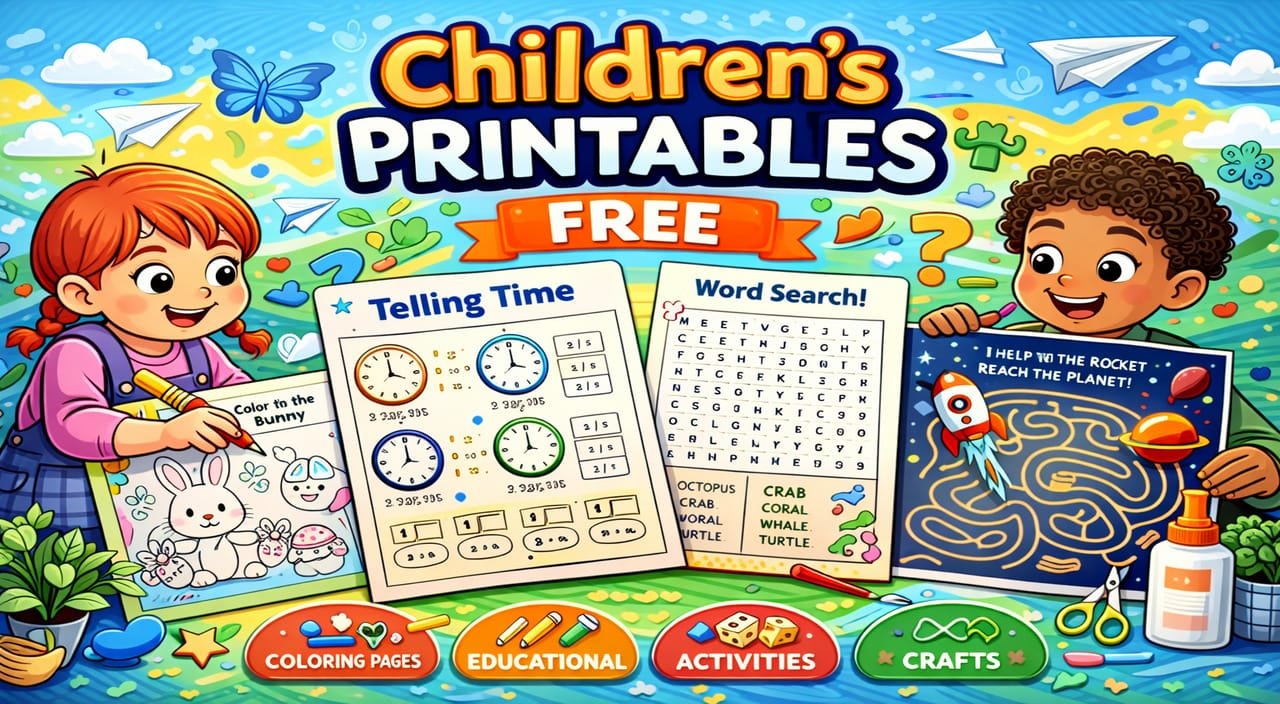
Children’s printables free are worksheets, coloring, and activity sheets which may be downloaded for free.
These materials assist children in learning and having fun, ranging from letter tracing to basic mathematics. Many moms and educators utilize them to occupy children and enhance education at home or in a classroom.
With such a variety on the web, you can locate printables of any subject or age range. The following provides some useful resources.
Key Takeaways
- Free children’s printables offer a wide range of engaging activities from educational worksheets to creative crafts and interactive games, making learning fun and accessible anywhere.
- These printables assist kids in developing key skills like math, reading, fine motor coordination, and problem solving to encourage growth outside of the classroom.
- Printables provide screen-free time, family bonding, and give kids a chance to tap their creativity and independence.
- Incorporate printables into your day with ease. Mix in old school teaching methods, utilize digital tools to access materials, and remain organized for speedy access.
- Personalizing printables gives kids an opportunity to showcase their personality and modify tasks for their specific learning preferences and requirements.
- For parents everywhere, printables are a great, flexible resource to supplement lessons, memorialize special moments, and bolster home education.
Unlocking Printables
Open doors to learning with free kids printables that combine fun with functionality. With so many options online, these include everything from learning worksheets to crafts and activities. Printables can fuel reading, math, and problem-solving skills and inspire kids to discover new things.
Their many themed sets, hands-on tools, and seasonal content make it easy for parents and educators to find the perfect fit for any child. Best of all, most printables are versatile enough to be customized for various ages and abilities, providing families everywhere convenient and adaptable means to reinforce learning at home.
1. Educational Sheets
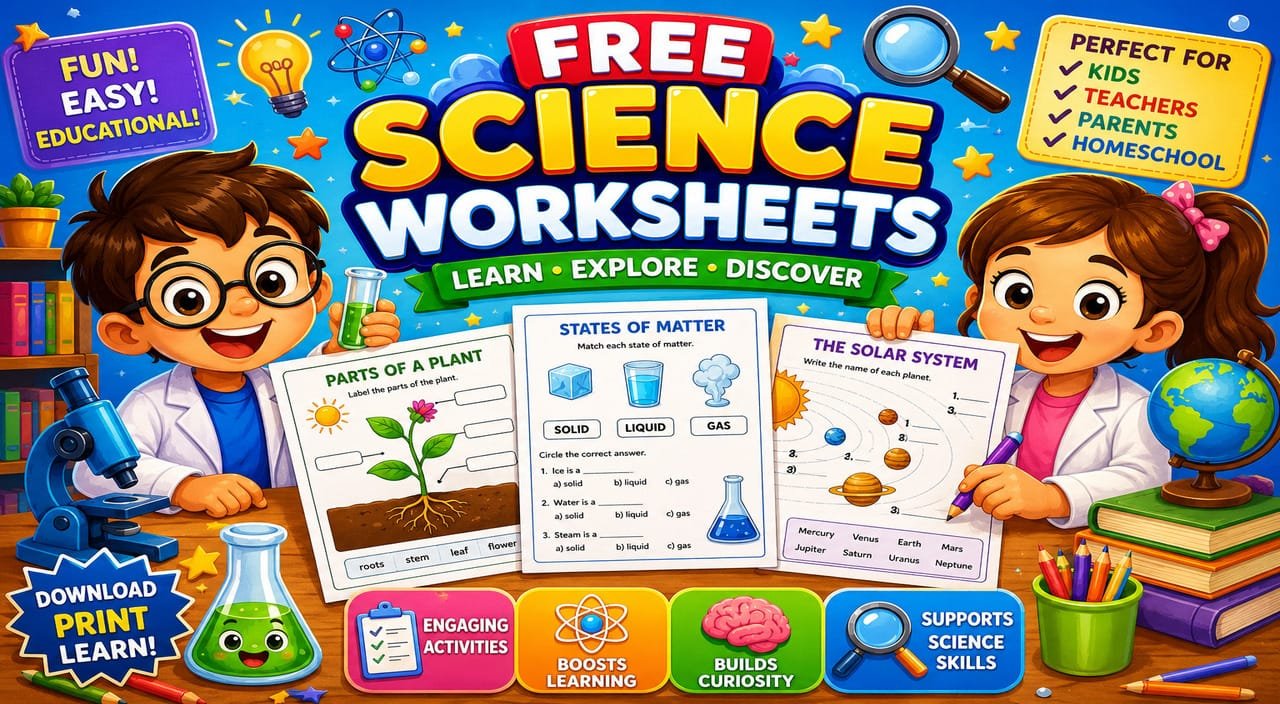
These educational printables vary in form, each aimed at a different skill. Math, reading, and science worksheets let kids exercise their classroom lessons. As writing sheets, they help kids with handwriting and spelling.
One worksheet could be about math facts, easy-to-read stories, or plant life cycles. Dot worksheets are extremely useful for younger students. These develop counting and number identification.
Some printables have children join dots to uncover shapes or animals, so the exercise doesn’t feel like work but more like play. These activity sheets usually relate to a lesson from class and help to support what they’re learning through repetition and play.
2. Creative Pages
Animal, nature, or known character coloring sheets ignite imagination. Printable craft templates provide easy instructions for creating masks, paper puppets, or handcrafted bookmarks. Lots of kids are fond of creating their own greeting cards or designing bookmarks, which are perfect accents to presents or reading time.
Coloring puzzles take it one step further, having kids match colors, navigate mazes, or finish patterns as they color. These activities inspire creative thought and can be utilized for calm afternoons or as collaborative assignments.
3. Interactive Games
Play-based learning is crucial for children and printables facilitate it. Printable mazes and puzzles develop logic and problem-solving skills. Some games are shape matching, word find, or riddle solving.
All of these can be printed and played either solo or with friends. Scavenger hunts are a winner, particularly themed lists that send kids hunting for things around the house or outside.
Dot activities combine creativity and numbers, providing a fun and casual method to practice counting and number recognition while bringing vibrant patterns to life.
4. Practical Tools
Checklists, planners and printable calendars teach kids organization. These are easy, yet incredibly effective tools that show kids how to chunk big tasks and manage time. For instance, a weekly planner can be used to jot down homework, chores and special events.
Journal or memory book template printables provide kids with room to jot down daily events or capture milestones. These printables spur conversations around emotions, accomplishments, and aspirations, cultivating habits for self-reflection.
5. Thematic Sets
Thematic printables connect learning to the world. Holiday coloring pages, crafts and worksheets mark special events such as Christmas, Halloween, or cultural festivals. One set may contain cut-out decorations, themed puzzles, and activity sheets that suit the season.
Teachers and parents have these sets to build lessons around holidays or seasons to keep school work feeling relevant. Holiday crafts enable children to be creative while giving them an opportunity to learn about a variety of traditions.
More Than Paper
Our free kids printables are more than just coloring or fill-in sheets. They give kids a screen break and bring learning to life in ways a device can’t. Printables serve as a middle road. Parents and teachers love them because they merge the convenience of digital with the tactile experience young minds desire.
When printables are utilized properly, they make learning hands-on and tangible, not just another to-do.
Skill Development
Printables can target highly specific skills. For math, consider counting charts, basic addition games or even scissor puzzles that develop number sense. Language printables could be matching words with pictures, tracing letters, or fill-in-the-blank stories that ignite early writing.
These aren’t just busy work; they’re designed to give kids practice on what they’re learning in class or at home. Your child’s critical thinking skills develop when worksheets have her identify patterns, compare concepts, or solve puzzles.
There are worksheets out there that convert simple riddles into logic lessons. A printable maze or a matching game is sometimes more than just fun; it’s an opportunity to develop critical thinking skills without the kids even realizing it.
Fine motor skills get a workout too. Cutting shapes, gluing paper, or coloring in the lines may appear trivial, but they help with grip, control, and hand-eye coordination. A printable that has kids folding, cutting, or assembling is about more than crafts.
It’s hands-on practice for the real world. Social skills count as much as academics. Group printables—board games, role-play masks, shared story maps—urge kids to collaborate, converse, and exchange thoughts.
Others are designed for duos or small groups and inject some collaboration into the mix.
Screen-Free Time
Printables give your families a reason to disconnect. Not a tablet in sight, a tower of printables beckons some hands-on fun. Basic board games, scavenger hunts, or themed crafts provide an afternoon full of laughter and learning, no batteries required.
There’s something about families doing printables together that just makes them closer. When everyone is at the table, cutting and drawing or putting a puzzle together, it’s PLAY, not ‘educational’. These moments count, particularly when days get hectic.
Kids need screen breaks for healthy minds and eyes. Printables are an easy way to keep minds sharp without the glow of a monitor. Tactile activity — coloring, folding, gluing — brings kids down from the hyperactive edge and helps them center.
Experience beats memorization. When children learn with their fingers and senses, they remember better. Printables are a quick, inexpensive way to make this happen.
Fostering Independence
Printables put kids in control. With a variety of themes and types, kids get to choose what fascinates them, be it a maze, word search, or craft. Self-guided activities build kids’ confidence.
If a kid can complete a worksheet or craft all by himself, that little victory accumulates. Over time, these victories help them trust their own decisions. Printable worksheets are available at all levels.
Kids can proceed at their own pace, skipping ahead or reviewing as necessary. This freedom allows them to take ownership of their progress.
There’s a universe of possibilities! From science experiments to art projects, printables provide kids with countless opportunities to explore. More options lead to keeping kids inquisitive and experimenting.
Smart Integration
Smart integration integrates free children’s printables into daily life in ways that enhance learning, keep kids engaged, and save parents and teachers time. Printables can be seamlessly blended with hands-on activities, digital tools, and group work to make lessons dynamic and engaging.
Teachers can integrate printables with smart boards or interactive whiteboards, transforming a simple worksheet into a class-wide discussion generator. For students with special needs, printables combined with technology enable customized lessons that match individual learning styles. CBT worksheets, for instance, can aid children in taming anxiety and developing resilience, fostering both mental wellness and educational development.
- Integrate printables into morning routines for a serene beginning!
- Combine printables with story time, math games, or science experiments.
- Use printables as group work for teamwork skills.
- Combine worksheets with smart board activities for class participation.
- Print out lesson aids before you go, so you can learn on the go.
- Or smart integration with printables to track progress or goal-set with checklists.
- Add printables to homework for extra practice.
Finding Quality
Search for printables that are age and skill appropriate, engage kids, and align with your lessons. Worksheets with obvious steps, vivid pictures, and minimal instructions do nicely. Some parents read the reviews or ask in online groups to see what other families and teachers liked best, even getting ideas on how to use them in entertaining ways.
Be sure to always verify that a printable matches your child’s age or grade level. It prevents frustration and maintains the fun of learning.
| Source Type | Example Websites | Features |
|---|---|---|
| Education Portals | Education.com, Twinkl | Wide range, expert-created |
| Teacher Blogs | The Measured Mom, 1+1+1=1 | Real-world use cases |
| Government Sites | NASA for Kids, National Library | Reliable, curriculum-based |
| Community Forums | Teachers Pay Teachers, Reddit | Peer-reviewed, rated |
Printing Tips
More durable paper leads to durability, especially for board games or flash cards. Smart integration involves laminating to repurpose printables for group activities or hands-on kids.
Occasionally, black-and-white will do, reserving color ink for the finer points. If you’re doing art or science visuals, color can make a huge difference.
| Printing Option | Use Case | Tip |
|---|---|---|
| Home Printer | Everyday worksheets | Print in draft mode for practice |
| Office Supply Store | Large batches, color prints | Ask for recycled paper |
| Digital Only | Tablet use, eco-friendly | Use stylus for writing |
Store printed pages in folders or trays. That reduces mess and spares you minutes when you need something pronto.
Organizing Systems
A basic system begins with folders or binders. Bundle printables by age, theme, or subject for convenient grab and go accessibility.
A few families or teachers employ digital folders on a shared drive, sorted by topic. This is great if you want to print on demand or pass along to others.
A checklist can assist you in monitoring which printables you have utilized and identifying any missing areas. This avoids repeats and keeps learning fresh.
Be sure to label all. A little work in the beginning saves you mess and stress later.
Beyond The Page
Childrens printables are more than just coloring and math drills. Today, they go beyond the page, integrating what they learn into daily life in hands-on and digital ways. Used wisely, these materials ignite the imagination, dissolve the separation between play and work, and clear a channel for inventive thought.
Printables could now be part of an interactive tool that is part of lessons that get kids touching, moving, and thinking in new ways. With a little creativity and the right strategy, every printable can become a story awaiting a child’s scribble.
Design Psychology
Design defines how kids relate to printables. When a sheet explodes with color or images that resonate with a child’s world—think animals, food, or favorite games—kids are eager to engage. Clear, strong images pop, while busy backgrounds or too much copy detract.
Simple designs with large areas and sequential photos guide kids on what to do next without overwhelming them. A printable with arrows, numbered steps, or sample answers can direct a child without usurping their autonomy and helps them initiate and complete work on their own.
Age is important. Chunky lines and friendly faces work best for toddlers. The older kids hunt for themes that correspond to their interests, such as sports, nature, or even short stories. A perfectly designed printable for the age and stage lures kids in with just the right amount of challenge and fun.
Customization Power
Customizing printables imparts ownership to kids. Allowing them to select colors, scribble in the margins, or even retitle converts a worksheet into their own. Certain templates include blanks for artwork or text, allowing each kid to narrate the story or puzzle out the solution themselves.
A lot of sites have editable PDFs or easy drag-and-drop tools now. Kids can interchange pictures, insert their own names, or create their own questions. This type of flexibility helps them view printables as a beginning, not the end.
It’s about allowing kids to be heard, perhaps transforming a map worksheet into a treasure map or a blank chart into a family tree.
Digital Fusion
Printables and digital tools now intermingle. Apps allow kids to write on worksheets with a finger or stylus, then save or share their work virtually. Some printables connect to short videos or sound bites, such as a piano keyboard with an associated music app or a science sheet with a real-life experiment video.
Kids can scan QR codes or utilize AR to watch worksheets come alive. Sharing introduces another dimension. Kids share their completed art or puzzles in secure online galleries, exchange tips with friends, or participate in worldwide challenges.
This combination of screen and paper allows children to learn in methods that align with their world—rapid, adaptable, and continuously evolving.
Adapting Activities
Adapting activities with free kids printables is more than just creating worksheets. It’s about molding each activity to suit a child’s developing intellect. With the appropriate modifications, printables can support children across ages and needs to learn, play, and develop skills in ways that are intuitive and enjoyable.
Here are some ways to adapt activities to make learning more personal and effective:
- Match printables to a child’s age and stage.
- Modify activities for visual, verbal, or kinesthetic learners.
- Insert sensory or sequential supports for special needs.
- Switch up themes or skill levels for more interest.
- Use tech tools for more interaction or feedback.
By Age
Selecting the appropriate printable for each age adapts the activity to make learning easier. Toddlers, at two or three, typically get the most out of learning through play, so printables with tracing, matching and easy sorting do well. These assist a young child’s fine motor skills and maintain their curiosity.
For preschool and early elementary ages, printables with a side of adding letters, numbers, or puzzles can ignite early reading and math. As kids become older, they are prepared for vocabulary sheets, logic puzzles and science charts that extend them.
Themes that correspond with their interests, such as animals, space or sports, keep them hooked and craving more. It is savvy to provide more difficult printables as they age, so they feel stretched and witness their advancement.
By Learning Style
Kids learn differently, and you can adjust printables to fit. Visual learners enjoy bright colors, clear images, and charts, so printables with a lot of visuals are best. Auditory learners perform better when activities incorporate songs, rhymes, or even directions they can hear.
Kinesthetic learners have to move and touch, so printables with cutting, folding, or sorting steps assist this. Mixing types, such as a worksheet with a do-it-yourself craft or a matching game with a song, lets kids experiment and try what fits them best.
Providing them with choices allows them to explore how they learn and maintains their enthusiasm for participating.
For Special Needs
Some kiddos require additional assistance. Printables are easily modified to accommodate. Easy-to-understand graphics and concise, bold steps assist children who struggle with reading.
For sensory seekers, printables that incorporate textures, bright colors or shapes they can physically touch shine. Something as simple as incorporating large print or picture cues can make activities more manageable.
Providing such additional resources like flash cards, audio companions, or a matching set of objects rounds out the experience. That way, all the kids have an equal opportunity to learn, regardless of their needs.
A Parent’s Perspective
Free kids printables do indeed have a legitimate place in family life. From a parent’s perspective, they’re more than just time-fillers for kids. These tools can design the way a child develops at home. Many parents view printables as a connector between the classroom and home, both aiding in the retention of lessons learned at school and providing children with additional opportunities to master new skills.
A simple shapes worksheet or a word search with the school’s weekly spelling words can make an ordinary afternoon into an educational one without it feeling like additional labor. Printables provide parents a means to participate in their kid’s education. When a teacher hands home a parent questionnaire or survey, it’s an opportunity for parents to convey what makes their child special.
Moms and dads could blog about their kid’s favorite books, hobbies, or even what gives them butterflies. This allows professors to learn about each student. It allows parents to feel connected and appreciated. Filling out these forms gives parents a say in their child’s education and assists teachers in carving out an environment where every student succeeds.
With free printables at home, parents can immediately locate something suitable to their child’s needs or interests. For instance, if your kid loves animals, a free wild cats coloring page can get an exciting nature conversation started. If math seems hard, a quick number game can work on counting or sums.
Printables are simple to print at home or download on a phone or tablet, so they are always prepared whenever inspiration strikes. Because they are free, all families can take advantage, regardless of budget. From my own experience, printables can do more than drill facts. They create play and growth space.
My niece loves puzzles, so I’ll sometimes print out crosswords or mazes for her. She’s eager to complete them, and it helps her think differently. Sometimes, we write on easy “About Me” worksheets, much like the ones teachers utilize at back-to-school time. It’s an opportunity to discuss what she enjoys, what she wants to know more about, or what makes her proud.
These small touches help children view education as a component of normal life rather than something that only occurs in the classroom.
Conclusion
There’s so much that kids take away from printables. They color and cut and learn new words. Parents discover fast solutions for hectic days. Teachers sprinkle fun on lessons without hassle. Printable childrens fit a lot of needs. One kiddo may sort shapes, another may work on the alphabet, and another may play a matching game. Totally free and a click away. Kids stay occupied, minds stay active, and adults discover some peace. Printables grow with kids, morph with skills, and fill in gaps on rainy days or quiet hours. For more, visit free printables sites and share your favorites! Printables are where it’s at to learn and play with kids, so keep ‘em handy and test out new ones as your little one grows!
Frequently Asked Questions
What are children’s printables?
Childrens printables free They’re kids printables that are free to download and print at home or at school.
Are free children’s printables safe to use?
Indeed, most good sites have safe, age-appropriate printables. Always know your source and review content before handing it to your kids.
How can I use printables for learning at home?
Printables can help with reading, math, art, and logic. Just print them out and add to your activities or study time to make learning fun and interactive.
Can I customize free printables?
A few sites enable you to edit or customize printables. Search for editable versions or templates to insert your kid’s name or details.
Do I need special software to print free printables?
No magic software required. Most printables come as PDFs or images which you can open and print with standard programs.
What ages are printables suitable for?
We’ve got printables for all ages, everything from toddler to older children. Be sure to always pick activities that fit your child’s age and skill level.
Where can I find high-quality free printables?
A lot of educational sites and parenting blogs have free printables. Seek out sites that have positive reviews and specific educational objectives for best results.